

Views: 0 Author: Site Editor Publish Time: 2026-08-28 Origin: Site


Purchasing a premium aftermarket cover only to discover standard refills must be crushed, folded, or removed from their original packaging to fit is a common and avoidable procurement error. Tissue manufacturers frequently adjust cardboard packaging dimensions, ranging from low-profile flats to high-capacity family sizes and curved boutique designs. This constant shifting creates ongoing compatibility issues with rigid aftermarket covers and organizers. Consumers and facility managers often find themselves with a container that simply cannot hold the consumable it was designed for without causing jams or torn sheets. Mitigating this requires a technical understanding of standard industry dimensions, internal clearance tolerances, and specific evaluation criteria for selecting functional, long-lasting dispensing solutions. We will break down exact measurements, material tolerances, and structural requirements to ensure your next dispenser functions flawlessly without damaging the product inside.
Standard Rectangular Baselines: Most standard flat refills require an internal clearance of at least 9.5 x 5.25 x 4.0 inches to accommodate brand variations without binding.
Cube Box Tolerances: Standard cube refills require a minimum internal footprint of 4.6 x 4.6 inches and a height clearance of 5.25 inches.
Internal vs. External Dimensions: Material thickness (especially in wood, ceramic, or thick acrylic) dictates that external dimensions cannot be used to verify refill compatibility.
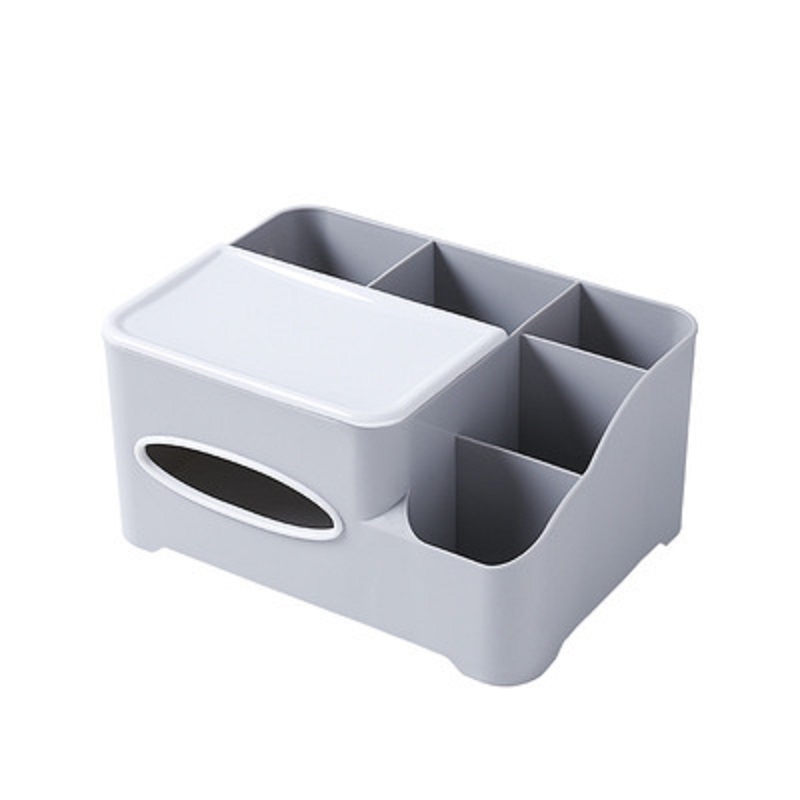
Functional Upgrades: Modern solutions have evolved beyond simple covers, with options like a desktop tissue box organizer or a living room tissue box with storage offering consolidated utility.
To evaluate any cover or organizer, buyers must first establish the baseline dimensions of the consumable refills they intend to use. Without accurate measurements of the cardboard insert, even the highest quality holder will fail to perform its primary function. Manufacturers do not adhere to a single universal standard. Dimensions fluctuate based on ply count, sheet capacity, and brand-specific packaging designs. When specifying a standard tissue box cover for commercial or residential use, you must account for the largest possible refill you might purchase.
Typical industry dimensions for standard rectangular flat boxes range from 8.5 to 9.31 inches in length, 4.5 to 5.13 inches in width, and 2.5 to 3.88 inches in height. These variations might seem minor on paper. In practice, a fraction of an inch is the difference between a smooth fit and a crushed cardboard corner. High-capacity or "family size" variants often exceed 4 inches in height, rendering low-profile covers completely obsolete. If you upgrade to larger capacities to reduce refill frequency, your cover must have the vertical clearance to match.
The "longer style box" format is frequently referenced in custom DIY patterns, such as stained glass crafting or woodworking projects. This specific format requires verifying maximum length tolerances before building or buying a rigid holder. Failing to account for the longest available brand on the market means your custom build will only work with a narrow selection of refills. Open tissue dimensions, when pulled flat, generally measure around 8.4 x 8.2 inches. This open footprint dictates the necessary width of the dispenser slot to prevent bunching as the sheet is pulled through the top.
Standard Industry Refill Dimensions | |||
Format Type | Length Range (inches) | Width Range (inches) | Height Range (inches) |
|---|---|---|---|
Standard Flat (Low Profile) | 8.50 - 9.00 | 4.50 - 4.75 | 2.50 - 3.00 |
High-Capacity Flat (Family Size) | 8.75 - 9.31 | 4.75 - 5.13 | 3.50 - 4.25 |
Standard Cube | 4.25 - 4.50 | 4.25 - 4.50 | 4.75 - 5.10 |
Personal/Compact Flat | 6.50 - 7.25 | 4.00 - 4.50 | 1.50 - 2.25 |
Standard industry dimensions for cube formats are highly consistent across major brands, typically measuring 4.5 x 4.5 x 5 inches. This consistency makes cube covers slightly easier to size, but structural realities still apply. Tolerances for cube covers must account for slight cardboard bulging at the seams. When cardboard boxes are packed tightly with tissues at the factory, the sides bow outward slightly.
This bulging requires a minimum 0.125-inch buffer on all interior sides of the cover. If the internal cavity is exactly 4.5 inches wide, the bowed cardboard will scrape against the sides. This creates a vacuum effect that makes the empty box incredibly difficult to extract later. Proper clearance ensures the refill drops in effortlessly and can be removed without force. You should never have to push or squeeze a cube refill into its housing.
Beyond flats and cubes, the market includes several niche formats that require specific handling. Cylinder formats, like Kleenex Perfect Fit, are designed specifically for cup holders in vehicles. Because these hold fewer sheets, a common consumer workaround is to retain the empty tubes and manually refill them with standard tissues. This requires carefully rolling a stack of flat tissues to mimic the original factory pack.
Some brands utilize curved cardboard packaging for aesthetic appeal, known as boutique designs. These curved edges can cause unexpected binding at the corners of strictly rectangular aftermarket covers. If your preferred brand uses curved packaging, you must measure the widest point of the curve, not just the base. "Personal size" flat boxes are often sought for car center consoles. Since these compact variants are increasingly discontinued by major manufacturers, users are forced to retain old packaging and manually refill them to maintain console compatibility.
Assessing the structural and functional design of a cover ensures reliable dispensing and prevents tissue tearing. A well-engineered holder focuses heavily on internal mechanics, material tolerances, and the physics of extraction. You cannot judge a dispenser solely by its exterior finish.
Always subtract the material thickness from the manufacturer's stated external dimensions. External measurements provide zero insight into refill compatibility. A wooden cover might measure 10 inches long externally, but if the wood is half an inch thick on each side, the internal cavity is only 9 inches. That is too small for many standard flats. Apply the 0.25-inch rule: the internal cavity must be at least 0.25 inches larger than the cardboard refill on all axes.
This extra space allows for easy loading and necessary air displacement during extraction. When you pull a tissue quickly, air must rush in to fill the void. If the box is vacuum-sealed against the walls of the cover, the resulting suction will cause the tissue to tear. For those creating custom patterns, like 3D printing or stained glass holders, this 0.25-inch internal buffer must be hardcoded into the design to prevent the cardboard from getting stuck.
Material Thickness Deduction Guide | ||
Material Type | Average Wall Thickness | Total Deduction (Length & Width) |
|---|---|---|
Stamped Metal / Tin | 0.05 inches | 0.10 inches |
Injection Molded Plastic | 0.125 inches | 0.25 inches |
Cast Resin / Acrylic | 0.25 inches | 0.50 inches |
Solid Wood / Bamboo | 0.375 - 0.50 inches | 0.75 - 1.00 inches |
The shape of the top opening directly impacts performance and sheet integrity. Oval openings, requiring a minimum of 4 inches in width, provide the lowest friction coefficient for standard 2-ply tissues compared to narrow slits or circular holes. A wide oval allows the tissue to fan out naturally as it exits, preventing the edges from catching.
Sharp edges or poorly finished slots in metal or cheap plastic covers lead to high tear rates. A smooth, polished inner lip is mandatory for seamless extraction. If the slot is too narrow or has micro-abrasions from the manufacturing process, the delicate paper fibers will snag. When evaluating a cover, run your finger along the inside edge of the dispensing slot. It should feel completely smooth without any burrs or casting lines.
How the cover secures the refill is just as important as how it dispenses. Bottom-slide bases offer secure retention but can warp over time if manufactured from thin plastic. If the track warps, the base will constantly fall out. Magnetic bottom closures are ideal for heavy materials like wood, leather, or thick resin. Strong neodymium magnets prevent the refill from falling out when the unit is lifted for cleaning or relocation.
Weight requirements also play a critical role in daily function. The cover must weigh significantly more than the upward pull force required to dispense a single sheet. If the holder is too light, the entire unit will lift off the table during use, requiring two hands to grab a tissue. Heavy bases, or units equipped with weighted bottom plates, ensure one-handed operation remains reliable.
Matching the structural design to the environmental use case guarantees both utility and aesthetic harmony. Modern holders often combine dispensing with secondary storage features, transforming a single-use item into a functional hub for the room. You need to evaluate the specific demands of the space before selecting a form factor.
Designed specifically for office and work-from-home environments, a desktop tissue box organizer maximizes limited surface area. It integrates standard rectangular tissue housing with compartmentalized storage for pens, styluses, notepads, and charging cables. This consolidation keeps the workspace clear and ensures essentials are always within reach.
When evaluating these units, focus on footprint efficiency and the presence of non-slip rubberized feet. The unit needs to hold enough supplies to be useful without consuming half the desk. Rubberized feet protect expensive desk surfaces from scratches while keeping the unit anchored during tissue extraction. This prevents the organizer from sliding across smooth wood or glass when you pull a sheet at an angle.
High-traffic communal areas demand robust solutions that cater to multiple users. A living room tissue box with storage features wider side compartments to accommodate remote controls, reading glasses, and magazines. By centralizing these easily misplaced items, you reduce clutter on coffee tables and end tables.
Evaluation should focus on aesthetic integration, such as wood grains, matte resins, or woven textures that match the room's decor. Weight stability is paramount in these environments. The unit must remain stable on soft, uneven surfaces like ottomans or fabric sofas. A wider base prevents tipping when a heavy remote control is placed in one of the side compartments.
Thematic designs include items like a multifunctional cartoon tissue box, which is perfect for pediatric clinics, children's rooms, or eclectic decor setups. These designs add personality to a space while maintaining basic functionality. They are highly effective in environments where approachability is desired.
Implementation risks exist with novelty shapes. They often feature irregular internal cavities that do not conform to standard rectangular or cube dimensions. Buyers must verify if these unique designs require "decanting"—removing tissues from the cardboard—to fit the internal geometry. If decanting is required, it introduces a new set of functional challenges regarding dispensing reliability.
Understanding the mechanical failures of tissue dispensing helps in selecting the right cover and maintaining smooth operation. Most failures stem from friction, moisture, or improper loading techniques that disrupt the manufacturer's intended design. Addressing these mechanical realities prevents daily operational frustrations.
Removing tissues from their original cardboard to fit a non-standard cover disrupts the manufacturer's interlocking fold pattern. This fold pattern is engineered specifically for continuous, pop-up dispensing. It is a continuous Z-fold. When you pull one sheet, the friction pulls the tail of the next sheet halfway up through the slot. Taking the stack out of the box removes the lateral compression provided by the cardboard walls.
Without that compression, the tissues shift sideways, the Z-fold misaligns, and you pull out clumps instead of single sheets. To mitigate this risk, only purchase covers verified to hold the cardboard box intact. The cardboard provides necessary structural support for the stack. The only exception is if the aftermarket dispenser features an internal spring-loaded base designed to push loose tissues upward against the top slot, maintaining constant pressure as the stack depletes.
In humid environments like bathrooms, cardboard naturally swells as it absorbs moisture from the air. Cardboard is highly porous. In a bathroom with a shower, ambient humidity spikes, causing the cardboard to absorb water vapor and expand. A cover with zero internal clearance will jam as the cardboard expands. What fit perfectly on day one becomes wedged tightly after a few hot showers.
This makes the empty box nearly impossible to remove without tearing it apart and scraping out the pieces. To mitigate this, opt for rust-proof, non-porous materials such as thick acrylic, treated bamboo, or high-grade resin. Ensure generous internal tolerances for any bathroom deployments to accommodate this inevitable swelling. A looser fit in a bathroom setting is always preferable to a tight fit that turns into a permanent jam.
Measure the exact dimensions of your preferred brand's cardboard refill, noting any curved edges or high-capacity heights.
Add 0.25 inches to all sides to determine your minimum internal clearance requirement before ordering a new dispenser.
Audit the spaces where tissues are currently deployed to identify areas where consolidated storage could reduce surface clutter.
Verify internal dimensions with suppliers to ensure seamless compatibility and long-term utility.
A: Standard rectangular boxes typically measure between 8.5 to 9.31 inches long, 4.5 to 5.13 inches wide, and 2.5 to 3.88 inches high, depending on the brand and ply count.
A: Most standard cube tissue boxes measure approximately 4.5 x 4.5 x 5 inches.
A: It is highly recommended to keep tissues inside their original cardboard packaging. Removing them disrupts the interlocking folds, leading to dispensing failures and tearing.
A: Check the manufacturer's specifications for internal dimensions, not external. The internal cavity must be at least 0.25 inches larger than your cardboard refill on all sides.
A: Tearing is usually caused by a dispenser slot that is too narrow, has sharp/rough edges, or by the cardboard box being compressed too tightly inside the cover, which increases friction.
A: Many modern center consoles require "personal size" flat boxes (often around 4.5 x 7 inches). Because these are frequently discontinued by major brands, many drivers retain an empty box and manually refill it with standard tissues.
A: Yes. Because cylinder formats are often more expensive or harder to find, many consumers save the empty tubes and manually roll standard flat tissues to refill them for use in car cup holders.


