

Views: 0 Author: Site Editor Publish Time: 2026-09-26 Origin: Site


Mismatched storage solutions carry hidden operational and financial costs that compound over time. Wasted floor space limits your total capacity, forcing you to expand your footprint unnecessarily. Compromised item integrity leads to damaged goods, while inefficient retrieval times slow down daily tasks and frustrate users. Purchasing containers without a standardized sizing strategy inevitably causes organizational chaos. You end up with unstackable units that create dangerous, leaning towers. Inventory becomes inaccessible because mismatched bins block access pathways. Materials degrade due to overloading improper containers. You need a reliable, engineering-based framework to solve this. Evaluating volume capacity, structural integrity, and specific form factors helps you select the optimal storage system. This approach matches your spatial constraints and load requirements perfectly. Integrating high-quality storage boxes with lids transforms cluttered, inefficient spaces into highly optimized, accessible zones.
Measure External Footprint First: The physical dimensions of the final storage location (shelving, racks, closets) must dictate the maximum external dimensions of the containers.
Prioritize Modularity: Standardizing on clear stackable multi-size storage boxes prevents vertical space waste and ensures structural stability.
Match Form to Function: Understand the specific trade-offs between a space-saving 41L foldable plastic storage box and a rigid, heavy-duty wheeled box with lid in multiple specifications.
Respect Load-Bearing Limits: Box size, lid design, and material composition directly dictate the maximum safe stacking height and weight capacity.
Meticulously measuring the external staging area is your first step in container selection. You must evaluate access pathways before considering internal box capacity. Measure doorways, aisle clearances, and under-bed heights accurately. A box that holds all your items but cannot physically pass through a door frame or navigate a tight hallway corner is entirely useless. You must account for the turning radius in narrow spaces, especially when handling rigid, oversized containers. Document these maximum clearance dimensions before looking at product catalogs.
Calculate the exact dimensions of your final storage location. Check the depth, width, and height clearance of shelving units, closets, or warehouse racks. You want a flush fit to maximize space utilization, but you must leave a functional margin. Allow at least one inch of clearance above the lid to slide containers in and out without scraping the shelf above. Measure the distance between shelf uprights to ensure multiple boxes can sit side-by-side without overlapping the structural supports.
Account for lid overhang in your overall footprint calculations. Structural ribbing, handles, and base tapering significantly affect the true physical size of the unit. External dimensions never equal internal usable volume. Injection-molded plastics require a draft angle to release from the manufacturing mold, which creates tapered walls. This tapering reduces the bottom footprint, meaning a box that is 24 inches long at the lid might only offer 20 inches of flat space at the base. Thick lids and reinforced bottoms add vertical height but subtract from internal depth. Always subtract these structural elements when calculating how much inventory will actually fit inside.
Measure the absolute width between the vertical posts of your shelving unit, not just the shelf edge.
Measure the depth from the front lip of the shelf to the back wall or cross-brace.
Measure the vertical height from the top of one shelf to the bottom of the shelf immediately above it.
Subtract one inch from the depth and height measurements to establish your maximum allowable container dimensions.
Divide the usable width by the external width of your target container to determine how many units can sit side-by-side.
Respect the physical limits of lifting and maneuvering large containers. Fully loaded boxes can quickly become dangerous to handle. Follow general ergonomic best practices and workplace lifting guidelines, which generally cap safe unassisted lifting at 50 pounds. Heavy boxes stored above shoulder height drastically increase injury risks and drop hazards. Keep heavy containers at waist level for safe transfer. If a container requires two people to lift safely, its placement on a shelving unit must accommodate a two-person approach.
Establish the rule of density for your overall storage strategy. High-density items require smaller boxes. Books, metal tools, and hardware should go into containers strictly under 30L. If you fill a massive 100L tote with metal hardware, it becomes an immovable anchor that will likely crack its own base. Low-density items utilize larger volumes efficiently. Textiles, seasonal decor, and bedding belong in large containers where volume matters more than weight capacity. Match the box volume precisely to the material density to ensure safe, long-term handling.
Small containers excel in highly specific, detail-oriented use cases. They are perfect for office supplies, hardware, craft materials, and small electronics. Dense or heavy items require granular sorting to remain accessible. Small boxes prevent you from digging through massive bins to find a single screw or cable. They allow you to categorize inventory tightly, keeping related components grouped together without mixing incompatible items.
Evaluate these sizes based on accessibility and ease of handling. They are highly suitable for shallow shelving units where deep boxes would overhang dangerously. Apartment living often demands compact solutions that fit into narrow closets or under low furniture. You can slide these onto standard wire racks easily. They keep heavy, dense items manageable and organized, ensuring that anyone can lift them safely without mechanical assistance.
The mid-range category offers incredible flexibility for dynamic environments. It is widely recognized as the most universally versatile size category available. These containers are ideal for a mix of household items, toys, seasonal clothing, and standard inventory. They hold a substantial amount of material without becoming too heavy for a single person to lift. A 41L foldable plastic storage box strikes the perfect balance between internal capacity and daily ergonomics.
Analyze the trade-offs carefully before committing to a folding design. Collapsibility provides massive logistical and space-saving benefits when the boxes are empty. You can store dozens of folded units in a tight closet or return them cheaply in a closed-loop transit system. High-quality foldable boxes utilize steel pin hinges or reinforced plastic snap-locks to maintain structural integrity when deployed. However, consider the potential reduction in structural rigidity. Molded, non-folding alternatives often support heavier vertical loads because they lack hinge points. Choose foldable designs for medium-weight items, dynamic storage needs, and environments where empty container storage is a premium.
Large containers handle the bulky items nothing else can accommodate. Their best use cases include bulky textiles, sporting equipment, large seasonal decorations, and oversized commercial inventory. They are designed to encapsulate objects that cannot be broken down or folded into smaller footprints. Using one large box is often more efficient than trying to force a large item across multiple smaller bins.
Choose between standard and high-cube equivalents based on your shelving architecture. Wider, shallower footprints work best for under-rack storage or sliding under beds. Extra-tall or deep boxes accommodate bulky, non-compressible items perfectly. Measure your vertical shelf clearance meticulously before buying high-cube models, as they frequently require removing a shelf layer to fit properly.
Mitigate your risks to prevent catastrophic bottom-out failure. Verify reinforced base specifications before loading heavy gear into extra-large bins. Look for grid-patterned ribbing on the underside of the box. This ribbing prevents deflection, which is the tendency of a flat plastic base to bow downward under sustained weight. Avoid overloading large bins with high-density materials. A massive box filled with paper records will crack its base, bow the shelf beneath it, and pose a severe lifting hazard.
Capacity Range | Ideal Item Density | Best Use Cases | Ergonomic Handling |
|---|---|---|---|
Small (10L - 35L) | High Density (Heavy) | Tools, hardware, books, electronics | Easy single-person lift, safe for high shelves |
Medium (36L - 49L) | Medium Density | Clothing, toys, standard inventory | Manageable single-person lift, waist-level ideal |
Large (50L - 100L+) | Low Density (Bulky) | Bedding, sports gear, seasonal decor | Requires two people if heavy, floor-level storage best |
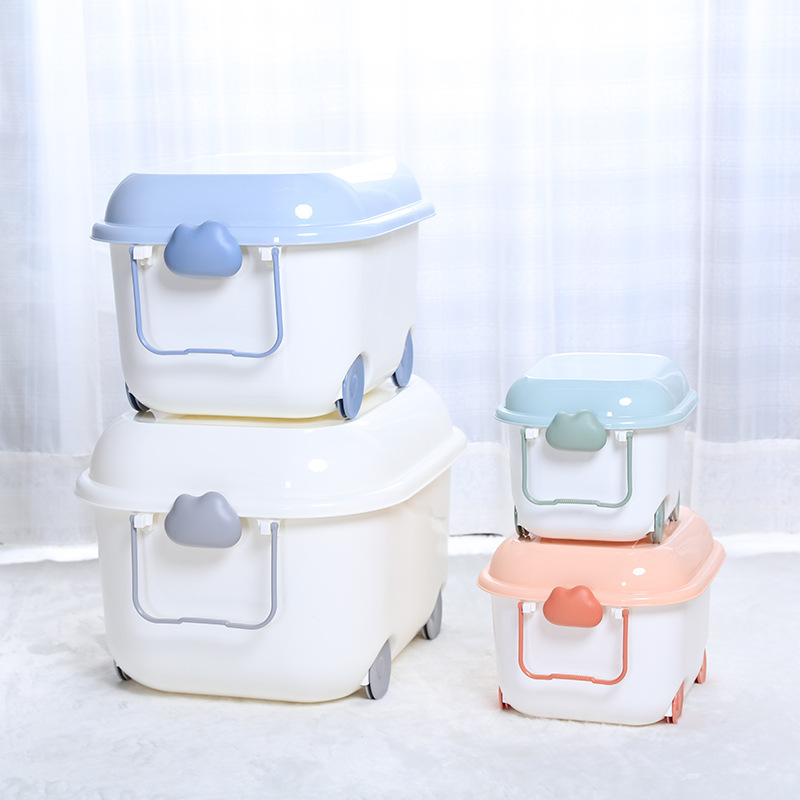
Operational advantages emerge rapidly when you can actually see your inventory without opening containers. Utilizing clear stackable multi-size storage boxes allows for rapid visual identification. This reduces handling time significantly during retrieval tasks. You eliminate inventory blind spots entirely. You no longer need to pull down and open five separate bins just to find one specific tool or document. Clear boxes streamline audits and make daily organization visually intuitive.
Know exactly when to specify opaque boxes instead. Opaque materials provide essential UV protection for light-sensitive materials. Photographs, certain plastics, artwork, and dyed fabrics degrade rapidly under constant light exposure through a process called photo-oxidation. Opaque bins also offer necessary security and privacy for valuable or sensitive items. Furthermore, they maintain aesthetic uniformity in highly visible areas like open office shelving or living rooms, hiding the visual clutter of the contents inside.
Analyze closure types based strictly on your environmental demands. Snap-on lids offer basic dust protection for indoor, climate-controlled closets. They rely on friction and tight manufacturing tolerances to stay attached. They are fast to open but can pop off if the box is overfilled. Latching lids provide secure transport and tight compression. They utilize mechanical levers to lock the lid down, preventing accidental spills when moving boxes between locations or loading them into vehicles. Attached hinged lids prevent lid loss in high-turnover environments. You never have to search for a missing cover, making them ideal for distribution and frequent access.
Evaluate environmental seals for tough, uncontrolled conditions. Assess weather resistance and gasket integration carefully. Pest deterrence is crucial for garage, attic, or warehouse storage. A polyurethane foam, silicone, or EPDM rubber gasket blocks moisture, insects, and extreme dust infiltration. Standard snap-on lids fail completely in damp basements or dusty workshops. If moisture is a threat, a gasketed latching lid is a mandatory upgrade to achieve an IP-rated seal.
Lid Type | Primary Mechanism | Best Environment | Key Advantage |
|---|---|---|---|
Snap-On | Friction fit over the rim | Climate-controlled indoors | Fast access, low profile |
Latching | Mechanical locking levers | Transit, vehicles, garages | Secure closure, prevents spills |
Attached Hinged | Interlocking alligator teeth | High-turnover distribution | Lid cannot be lost or separated |
Gasket Sealed | Rubber/Silicone compression | Damp basements, dusty attics | Blocks moisture and pests entirely |
Assess the return on investment for mobility features before purchasing large units. Upgrading to a wheeled box with lid in multiple specifications transforms heavy-duty tasks. Wheels are absolutely essential for floor-level applications where lifting is impractical. They make large-scale moves faster, safer, and less physically demanding. You can roll heavy inventory directly to the staging area without a dolly.
Evaluate caster durability based on your flooring surfaces. Hard plastic or nylon wheels work adequately for smooth indoor floors and carpets. Rubber or polyurethane casters handle rough concrete, asphalt, or warehouse floors much better. They absorb shock, reduce noise, and prevent floor scratching. Look for directional locks to keep boxes stationary on inclines or during transit. Check handle ergonomics to ensure safe, comfortable pulling of high-capacity loads over long distances. Undercut handles molded directly into the base provide the strongest grip without breaking.
Understand how load is distributed across modular systems to prevent structural failure. High-quality containers feature deeply recessed lids. These channels lock the base of the box above securely into place, preventing lateral shifting. Reinforced corners transfer vertical weight directly down to the floor or shelf. This engineering prevents the center of the lid from bowing under pressure, which would otherwise crush the contents inside. When you stack five bins high, the bottom lid takes the entire dynamic load of the four bins above it.
Identify dynamic versus static weight limits to maintain safety. Static limits apply to boxes sitting completely still on a reinforced shelf. Dynamic limits apply when you are moving a stacked tower on a dolly or in a vehicle. Dynamic forces multiply the effective weight due to vibration and shifting. Exceeding these limits causes immediate lid cracking. It leads to permanent base warping in the bottom-most unit of a stack. Always place the heaviest boxes at the bottom to lower the center of gravity and reduce column load stress.
Select product lines specifically engineered for true modularity. True modularity means the dimensions are mathematically related based on a standard footprint. For example, two medium boxes stack perfectly onto the exact footprint of one large box. This creates a stable, interlocked tower. It maximizes vertical space utilization without creating awkward overhangs. Modular systems allow you to reconfigure your storage layout as your inventory changes without buying new base containers.
Avoid the mixed brand trap at all costs. Combining different container profiles destroys vertical stability entirely. Lids and bases from different manufacturers simply do not align. The nesting grooves will not match, causing the top boxes to slide off easily. This mismatch wastes cubic volume and creates dangerous, leaning stacks that pose a severe safety hazard. Commit to one unified brand or product line to guarantee long-term scalability.
Uncontrolled environments pose severe risks to plastic integrity over time. Temperature fluctuations cause plastic embrittlement and structural fatigue. Extreme heat leads to softening and warping in garages, shipping containers, or unventilated attics. Once a box warps, the lid will never seal properly again. Freezing temperatures make standard plastics highly brittle, causing them to shatter upon minor impacts or when dropped.
Mitigate these risks by verifying material specifications before procurement. Polypropylene (PP) offers excellent general durability, impact resistance, and flexibility for standard indoor use. High-Density Polyethylene (HDPE) provides superior extreme temperature resistance. Choose HDPE for uninsulated outdoor sheds, cold storage facilities, or environments subject to rapid freeze-thaw cycles. Matching the polymer to the environment guarantees longevity.
Avoid the financial risk of over-specification. Procuring heavy-duty, waterproof, latching containers for basic indoor storage wastes your resources. You do not need military-grade rubber gaskets and reinforced steel hinge pins just to store spare blankets in a climate-controlled bedroom. Over-engineered boxes are also heavier, reducing your functional weight capacity and making daily access cumbersome.
Align the container's technical specifications strictly with environmental reality. Consider the access frequency of the storage location. Buy premium features only where moisture, pests, or heavy transit explicitly demand them. Use standard, cost-effective, clear bins for safe, dry, indoor shelves. This strategic allocation of resources allows you to buy more volume where needed while protecting sensitive items appropriately.
Audit your current inventory to separate high-density heavy items from bulky, low-density materials before purchasing any containers.
Measure your rack and shelf dimensions meticulously, documenting exact depth, width, and height clearances to ensure a flush fit.
Pilot a small batch of containers to test lid integrity, stackability, and ease of handling before executing a full-scale procurement.
Standardize your purchasing around a single modular product line to guarantee future cross-size compatibility and vertical stability.
A: The 40L to 50L range provides the best balance of volume and handling. It holds bulky items like clothing or inventory without becoming too heavy for a single person to lift safely. This footprint also fits perfectly on standard 18-inch and 24-inch deep wire shelving units.
A: Most standard 41L foldable boxes safely support 30 to 50 pounds internally. You must verify the manufacturer's dynamic stacking limit. Folding hinges bear less vertical weight than solid molded walls. Always place heavier, solid-wall containers at the bottom of any stacked configuration to prevent hinge buckling.
A: Choose standard height for dense items or if you have standard 18-inch vertical shelf spacing. Select extra-deep high-cube boxes only for bulky, non-compressible items like sporting goods or winter bedding. High-cube boxes require removing a shelf layer on standard racks to accommodate their extra height.
A: Clear plastics, such as specific polypropylene blends or polycarbonate, can be slightly more brittle than solid, opaque High-Density Polyethylene (HDPE). However, for standard indoor use, high-quality clear boxes offer ample structural integrity. They easily handle normal stacking loads without cracking, provided you do not exceed weight limits.
A: Upgrade to wheeled boxes when storing items at floor level, handling capacities exceeding 50 pounds, or moving inventory frequently. Wheels prevent ergonomic injuries and eliminate the need for secondary moving equipment like dollies. They are essential for large-scale moves across smooth warehouse or residential floors.
A: Measure the depth of the wire shelf and the external bottom footprint of the box. Ensure the box does not overhang the front edge by more than one inch. Account for the vertical clearance between shelves, leaving at least one inch above the lid for easy sliding.
A: Yes, but only if the load is distributed to the reinforced corners. Recessed lids channel the weight to the vertical walls. Never place a small, heavy box directly in the center of a larger box's lid. This concentrates the load, causing the lid to bow and eventually crack.


