

Views: 0 Author: Site Editor Publish Time: 2026-09-03 Origin: Site


Extended off-grid travel, overlanding expeditions, group basecamps, and family road trips share a common logistical bottleneck: sanitation planning. Underestimating your waste management needs leads to severe consequences. You will face frequent, unplanned detours searching for dump stations. Inadequate equipment creates unsanitary vehicle conditions. Weak structural designs risk catastrophic failure in remote environments. Large group trips suffer from severe congestion when facilities fall short.
You need a reliable framework to evaluate personal and group sanitation solutions. This guide breaks down user counts, trip durations, and waste volume capacities. We examine physical dimensions and structural weight limits. Proper planning ensures continuous compliance and comfort on extended trips. You will learn how to calculate exact capacity requirements. We cover the mechanical differences between various toilet architectures. You will discover how to match equipment to your specific vehicle constraints and group demographics.
Capacity Math Dictates Autonomy: A standard 5-gallon waste tank supports approximately 30-50 flushes, typically sustaining two adults for 3 to 5 days before requiring a dump station.
Group Scaling Rules: While solo or couple travel relies on flush-counts, larger off-grid gatherings must scale using time-based multipliers (e.g., baseline event standards of 1 unit per 50-75 people for 4 hours, adjusted exponentially for multi-day trips).
Structural Integrity Matters: Selecting units with verified weight ratings (e.g., a minimum 100 kg threshold for adult use) prevents equipment failure in remote environments.
Format Defines Maintenance: The choice between chemical cassette toilets, dry/bag-based systems, and high-capacity basecamp units fundamentally alters your daily maintenance routine and waste disposal legalities.
Demographic Sizing: Multi-user trips require adaptable solutions, balancing adult ergonomic needs with accessible options for younger travelers.
Capacity planning requires a clear understanding of your trip format. Event metrics differ entirely from personal travel metrics. Large off-grid gatherings demand high-volume solutions. Remote construction builds follow strict industry standards. These standards dictate one unit per 50 to 75 people. Personal family travel requires a different mathematical approach. You measure capacity strictly in flush volume or bag counts. You calculate these metrics per person, per day. A single portable toilet serves a family well but fails instantly at a basecamp event.
Time impacts capacity exponentially. A system rated for 50 guests over four hours reaches critical limits rapidly. Multi-day trips multiply these baseline figures. You must calculate requirements for longer trips exceeding seven days. This determines if a single high-capacity tank suffices. Alternatively, you might require a modular, bag-based system. Bag systems bypass fixed tank limits entirely. They rely on consumable storage rather than fixed blackwater volume.
Industry standards establish baseline usage assumptions. Expect three to five uses per person, per day. Several variables alter this baseline. High hydration levels in arid environments increase frequency. Dietary changes during travel affect output. Time spent at the campsite versus on the trail changes usage patterns. You must adjust your calculations based on these daily habits.
To determine your exact requirements for a vehicle-based trip, follow this calculation sequence:
Determine the total number of travelers in your group.
Multiply the group size by the baseline assumption of four uses per person, per day.
Multiply that daily total by the number of days you plan to remain off-grid without resupply.
For cassette systems, multiply the total uses by the average flush volume (typically 0.1 to 0.15 gallons) to find your required blackwater tank size.
For dry systems, divide the total uses by the capacity of your waste bags (usually 3 to 4 uses per bag) to determine your consumable inventory requirements.
Trip Type | Group Size | Duration | Estimated Uses | Recommended System Type |
|---|---|---|---|---|
Solo Overlanding | 1 Adult | 7 Days | 21 - 35 | Dry Bag System or 2.6-Gal Cassette |
Couple Road Trip | 2 Adults | 5 Days | 30 - 50 | 5.3-Gal Cassette Toilet |
Family Basecamp | 4 Persons | 14 Days | 168 - 280 | Composting or Modular Dry System |
Group Event | 50 Persons | 4 Hours | ~50 | Single High-Capacity Basecamp Unit |
Selecting the right architecture dictates your daily maintenance routine. Different mechanisms serve entirely different travel styles. You must match the technology to your specific logistical constraints. Field maintenance varies wildly between a sealed liquid tank and a dry bag system.
Cassette toilets operate using a freshwater flush mechanism. Waste drops into a sealed blackwater holding tank. You add chemical treatments to break down solids and mask odors. The capacity profile typically ranges from 2.6 to 5.3 gallons. A 5.3-gallon tank handles roughly 40 to 50 flushes. These units work best for RVs and campervans. Small family basecamps also benefit from this design. You must have eventual access to RV dump stations. You cannot empty chemical blackwater into standard wilderness catholes or vault toilets. Emptying a full 5.3-gallon tank requires lifting roughly 45 pounds of sloshing liquid, demanding proper physical leverage.
Dry toilets eliminate the freshwater flush entirely. This mechanism relies on heavy-duty waste bags. You use gelling agents and absorbents to manage liquids. The capacity profile remains theoretically unlimited. You are constrained only by your supply of bags. You also need physical storage space for packed waste. The compact A20 folding toilet represents a highly space-efficient solution. Overlanders prioritize cargo space over traditional flush mechanics. Folding units collapse flat during transit. They deploy quickly when needed. You simply tie off the bag and store it in a sealed container. External storage solutions, like a spare tire trash bag or a sealed PVC pipe on a roof rack, keep odors out of the vehicle cabin.
Composting toilets separate liquid and solid waste. This separation accelerates decomposition. Keeping liquids away from solids eliminates raw sewage odor. The capacity profile heavily favors long-term use. The solid bin often lasts three to four weeks for two people. You must empty the liquid jug frequently. Liquid containers usually require emptying every two to three days. These units require significant vertical installation space. They also need active 12V ventilation fans to maintain airflow. The term "composting" is slightly misleading for short trips; the system primarily desiccates the waste rather than turning it into true compost within a few weeks.
High-capacity units serve stationary off-grid setups. Remote cabin builds and large family reunions require massive holding tanks. These standalone units handle high traffic volumes. Some setups utilize multi-unit trailers. The capacity profile exceeds hundreds of gallons. You cannot empty these manually. They require professional pump-out services. Alternatively, you need heavy-duty transport to move the trailer. They offer zero mobility once deployed. You must level the ground perfectly before dropping a high-capacity unit to prevent structural warping under heavy liquid loads.
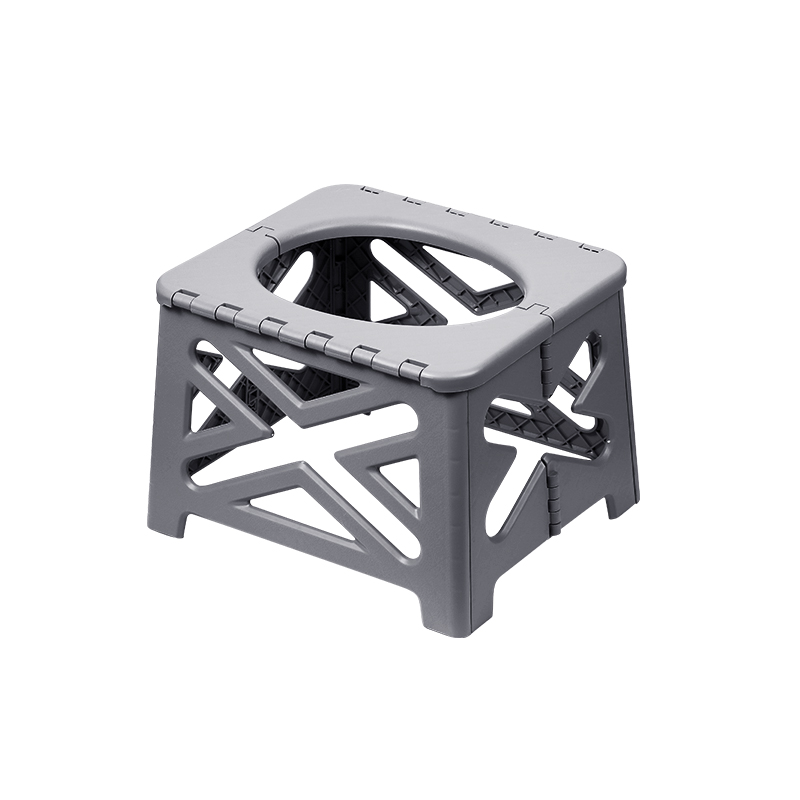
Capacity involves more than just holding volume. Physical dimensions and structural integrity play major roles in field success. You must evaluate how the unit fits your vehicle and your body. A system that holds enough waste but collapses under a user fails the primary objective.
Verified weight limits prevent structural collapse. Plastic components suffer fatigue under repeated stress. Remote environments amplify the risk of equipment failure. A broken hinge or cracked base ruins a trip immediately. You need equipment engineered for adult bodies. The A22 100 kg toilet stool provides a reliable baseline. It supports adult users safely. It maintains a portable footprint without sacrificing strength. Always check the manufacturer weight rating before deployment. Remember that uneven ground at a campsite places uneven torque on the legs. A unit rated for 100 kg on a flat laboratory floor might buckle if placed on a steep, rocky incline. Always level the ground before use.
Spatial planning dictates your packing strategy. Basecamp trailers feature massive footprints. They stretch up to 14 feet long and 8.5 feet wide. Vehicle-based travel demands ultra-compact solutions. You must measure your cargo dimensions carefully. A 5.3-gallon cassette toilet consumes significant floor space. It forms a rigid cube that cannot be compressed. Folding stools slide behind seats or under false floors. You trade comfort for cargo capacity. Measure your available clearance before selecting a unit. Account for the swing radius of cabinet doors or slide-out drawers in your camper build.
Seat height impacts user comfort significantly. Low-profile models save valuable vertical storage space. They fit inside small cabinets or under benches. However, low seats challenge adults with mobility limitations. Standing up from a low squat strains the knees. Standard-height models mimic residential fixtures. They provide superior comfort for extended trips. You must balance ergonomic comfort against your vehicle storage limits. If you choose a low-profile model, consider building a small wooden platform to raise it during use.
Family travel introduces complex demographic challenges. Adult-sized units often prove unsuitable for small children. Wide seat openings intimidate toddlers. High seats make independent use impossible for young kids. You need adaptable solutions for mixed-age groups. Integrating a family toddler potty chair solves this issue. It serves as a supplementary, low-footprint solution. It prevents cross-contamination between users. It dramatically improves ease of use for younger travelers. Dedicated child units simplify nighttime routines inside the tent. You avoid forcing a child to navigate a complex adult cassette toilet in the dark.
No single sanitation solution perfects every metric. You must accept specific trade-offs based on your travel style. Understanding these compromises helps you make informed decisions before heading off-grid.
Physical dimensions directly oppose off-grid autonomy. Large tanks allow you to remain off-grid longer. They reduce your reliance on dump stations. However, they consume valuable cargo space. Small tanks free up room for food and water. They force you back to civilization frequently. You must decide which resource holds more value. Overlanders usually choose small footprints. RV owners typically prefer maximum autonomy. If you drive a small SUV, a 5-gallon tank might consume 15% of your total cargo volume, forcing you to leave recovery gear behind.
Cassette toilets offer superior immediate odor masking. The sealed blade valve traps smells inside the tank. Chemical treatments neutralize biological odors effectively. This system requires continuous chemical purchases. You must store these liquids safely during transit. A spilled bottle of blue chemical ruins upholstery permanently. Dry systems eliminate chemical reliance entirely. They require meticulous daily bag management. You must seal bags perfectly to mitigate smell. Storing used bags requires dedicated external trash containers. You cannot keep a used WAG bag inside a hot vehicle cabin without experiencing severe odor leakage.
Different systems shift the financial burden over time. Composting toilets demand high initial investments. They feature complex diverters and ventilation fans. Their recurring costs remain incredibly low. You only buy coconut coir occasionally. Dry systems present low initial barriers. A folding stool costs very little upfront. The recurring costs compound quickly. You constantly purchase heavy-duty waste bags. Gelling powders and deodorizers add up over a multi-week trip. Evaluate your annual travel days to determine the best approach.
System Type | Initial Hardware Investment | Recurring Consumable Needs | Maintenance Frequency |
|---|---|---|---|
Cassette Toilet | Moderate | Chemical deodorizers, RV toilet paper | Every 3-5 days (Dump Station) |
Dry Folding Toilet | Low | WAG bags, bio-gel powder | Daily (Bag disposal) |
Composting Toilet | High | Coconut coir, peat moss | Liquids: 2-3 days / Solids: 3-4 weeks |
Field deployment introduces unpredictable variables. Environmental factors and human behavior stress your sanitation plan. You must anticipate these risks and prepare mitigation strategies to maintain a functional camp.
Inadequate facilities lead to unsanitary conditions. Group trips experience severe bottlenecks during morning routines. A single high-capacity tank creates long wait times. People rush the process, leading to messes. You mitigate this by deploying multiple modular units. Distribute folding stools across different camp sectors. Multiple stations improve flow dramatically. They provide redundancy if one unit fails. If a cassette toilet blade valve jams, having a backup dry toilet prevents a camp-wide crisis.
Improper waste disposal destroys public lands. Illegal dumping of blackwater carries severe fines. You cannot bury chemical waste in National Parks. Bureau of Land Management areas enforce strict pack-it-out rules. You must map RV dump stations in advance. Use specialized apps to verify station operational status. Utilize EPA-approved WAG bags for dry toilets. Waste Alleviation and Gelling bags remain landfill-safe. They comply with strict Leave No Trace principles. Never throw standard plastic bags filled with raw waste into a public dumpster.
Sealed cassette tanks react violently to environmental changes. Elevation gains cause internal pressure buildup. High temperatures expand the trapped gases. Opening the blade valve under pressure causes hazardous blowback. Raw sewage sprays upward into the cabin. You mitigate this through strict operating procedures.
Always ensure the top lid is completely closed and locked before touching the valve handle.
Slowly pull the blade valve open a fraction of an inch to vent the trapped air.
Listen for the hiss of escaping gas to stop before opening the valve fully.
Perform this venting process daily during altitude changes, even if the toilet is not in use.
Remote towns lack specialized camping gear. Running out of proprietary chemicals ruins your system. Specific bag sizes prove impossible to find off-grid. You risk losing functionality entirely. You mitigate this by standardizing your supplies. Build your dry setup around universally available items. Heavy-duty contractor trash bags work everywhere. Bulk bio-gel or even pine shavings serve as emergency absorbents. Avoid systems requiring proprietary, brand-specific replacement cartridges. If you rely on a specific cassette chemical, carry a two-week reserve supply in a sealed, crash-proof container.
Measure your vehicle's available cargo footprint to determine the maximum physical dimensions your setup can accommodate.
Calculate your group's daily waste volume using the provided framework to establish your required tank size or bag inventory.
Map out verified RV dump stations or legal landfill disposal sites along your planned route before departure.
Standardize your consumable supplies by testing universally available heavy-duty bags and bulk absorbents.
Establish a strict daily maintenance routine for venting sealed tanks and managing external waste storage.
A: A standard 5-gallon tank holds approximately 40 flushes. This equates to roughly three to four days of continuous use for two adults. Usage varies based on hydration and time spent at camp. You will require a dump station once the indicator turns red.
A: For short gatherings up to four hours, the industry standard is one unit per 50 to 75 guests. For eight-hour events, this requirement doubles. For multi-day group camping, calculate based on daily flush volume or bag capacity per person to prevent overflow.
A: Standard chemical toilets typically hold 250 to 300 lbs. Specific folding models are strictly rated for around 220 lbs. Verified weight limits remain mandatory for adult use to prevent structural failure in remote environments.
A: You can only dispose of EPA-approved WAG bags in standard municipal trash. These bags contain special gelling agents that neutralize biological hazards. Never throw raw liquid waste or standard plastic bags filled with human waste into regular dumpsters.
A: Properly maintained cassette toilets emit minimal odor. The sealed blade valve traps gases inside the holding tank. Chemical treatments break down waste and neutralize smells. However, you will experience a brief chemical odor during the actual flushing process.
A: Altitude changes cause internal pressure to build inside sealed tanks. You must slowly vent the blade valve before use. Always keep the lid closed while opening the valve to prevent hazardous blowback from escaping gases.
A: Composting toilets excel on extended trips because they separate liquids from solids. This separation eliminates sewage odor and extends solid capacity to several weeks. However, they require frequent liquid disposal and active 12V ventilation to function correctly.


