
- All
- Product Name
- Product Keyword
- Product Model
- Product Summary
- Product Description
- Multi Field Search

Views: 0 Author: Site Editor Publish Time: 2026-08-08 Origin: Site


A collapsed shelf in a bathroom causes severe structural and financial damage. When storage fixtures fail under excessive weight, falling hardware shatters floor tiles, cracks porcelain fixtures, and ruptures exposed plumbing lines. Consumers frequently miscalculate load-bearing requirements for bathroom storage, treating it like living room decor. Heavy liquid volumes, damp textiles, and high-humidity environments create unique structural demands standard decorative shelving cannot support.
To prevent failure, homeowners and contractors must move beyond generic manufacturer weight ratings. Establishing a secure storage system requires an evidence-based framework for evaluating shelf weight capacities, analyzing wall structures, and selecting the correct mounting hardware. Understanding the physics of load distribution and material strength ensures long-term stability in one of the most demanding environments in a home.
Stud Dependency: A properly installed floating shelf can typically support 45–50 pounds per wall stud it is anchored to, making stud placement the primary bottleneck for capacity.
Rated vs. Real-World Capacity: Manufacturer weight ratings assume ideal installation conditions; poor wall integrity or incorrect anchor usage can reduce actual capacity by up to 40%.
Material Span Limits: The distance between supports dictates material sag. Even dense hardwoods or tempered glass will fail if the unsupported span exceeds the material’s specific tensile strength.
Configuration Impact: Utilizing a double-layer bathroom storage shelf or bracketed system distributes weight more effectively than single-tier floating designs, allowing for heavier overall loads.
Defining the success criteria for bathroom storage requires evaluating architectural design against structural limitations. The physical shape and mounting method of a shelf dictate how weight transfers into the wall. Different configurations handle shear force and leverage in distinct ways, establishing hard limits on what they can safely hold. Contractors evaluate three primary architectures when planning bathroom storage layouts.
Floating shelves rely on internal metal brackets hidden within the shelf body. The standard rule for this architecture is 45 to 50 lbs of capacity per wall stud. In practical application, a standard 3-foot bathroom shelf anchored securely to two studs will safely support approximately 100 lbs under ideal conditions. Heavy-duty concealed brackets feature thicker steel rods and wider backplates. A heavy-duty system spanning two studs can push capacity to 300 lbs, while a longer bracket hitting three studs can support up to 450 lbs.
Floating designs suffer from the leverage problem. Shelf depth—how far the material protrudes from the wall—exponentially decreases overall weight capacity. A shelf that is 12 inches deep exerts significantly more downward leverage on the mounting hardware than a shelf that is 6 inches deep. If you place a heavy object on the front edge of a deep floating shelf, the mounting rods act as a fulcrum, amplifying the pull-out force against the wall anchors. For every inch of depth beyond 8 inches, contractors typically reduce the expected load capacity by 10% to maintain a safe margin of error.
Systems utilizing exposed hardware offer superior structural advantages. Visible L-brackets and gusseted supports change how load forces interact with the wall. Instead of relying on the internal weld of a concealed rod, an exposed bracket transfers shear force directly down the wall surface. The vertical leg of the bracket pushes against the drywall, stabilizing the horizontal load.
A wall-mounted bathroom storage rack with visible brackets can often hold 20% to 50% more weight than a floating shelf of the same dimensions, assuming identical stud anchoring. The addition of a diagonal gusset (the angled piece connecting the horizontal and vertical arms of the bracket) prevents the metal from bending under heavy liquid loads. This architecture easily handles the storage of large shampoo bottles, heavy cleaning supplies, and stacked wet towels without bending the horizontal support arm.
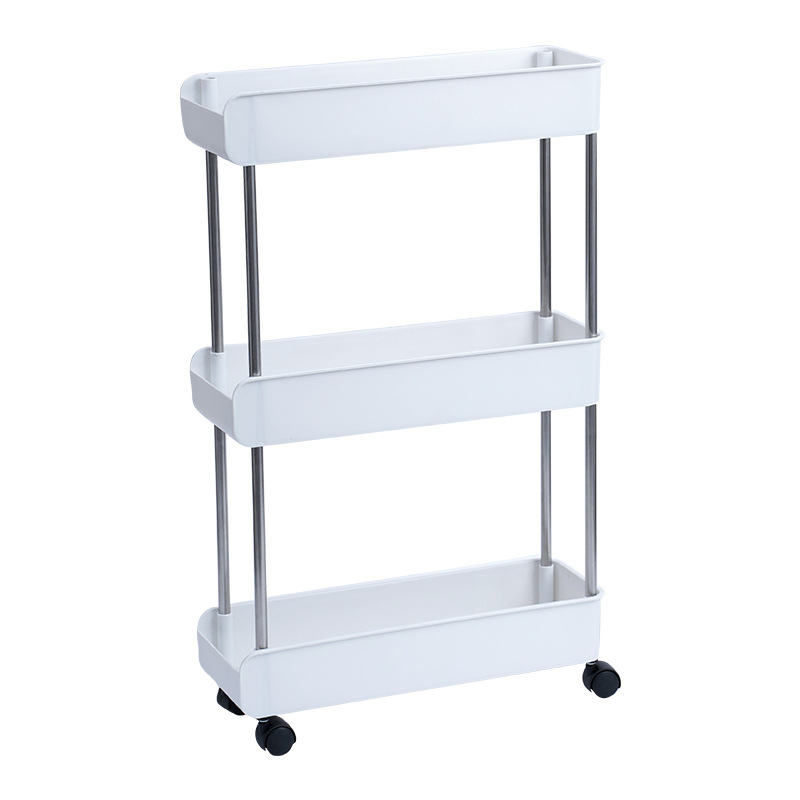
Multi-tier systems introduce vertical load transfer. Instead of concentrating all weight on a single horizontal plane, a multi-layer bathroom storage rack distributes the burden across multiple connection points or transfers it entirely to the floor. Freestanding units bypass wall load limits entirely, transferring weight straight down the vertical legs into the floor joists.
Freestanding multi-layer racks introduce a tipping hazard. When heavy items are placed on the top tiers, the center of gravity shifts upward. Anti-tip wall anchors become a strict necessity. These anchors do not bear the downward weight of the items; rather, they resist the forward pull-out force, preventing the unit from falling forward during use or if bumped. A properly anchored freestanding unit can hold upwards of 300 lbs total, provided the floor is level and the anti-tip hardware is secured to at least one wall stud.
Translating hardware specifications into real-world storage outcomes requires understanding the physical forces at play. A shelf is only as strong as its weakest component. Evaluating the mounting substrate, the material deflection rate, and the environmental conditions will reveal the true failure point of any storage system.
The method of attachment dictates the absolute weight limit. Direct wood stud penetration provides the highest level of security. A 3-inch wood screw driven directly into a structural stud can hold over 80 lbs of shear force individually. In contrast, drywall anchors—such as toggle bolts, threaded plastic anchors, or molly bolts—rely entirely on the crumbling resistance of the gypsum board.
Drywall anchors fail under dynamic loads in high-moisture environments. Items in a bathroom are frequently picked up and put down. This repeated action creates micro-vibrations. Over time, these vibrations enlarge the hole in the drywall, loosening the anchor. Toggle bolts offer the best drywall-only performance by clamping against the back of the board, but they still cannot match the rigid stability of a wood stud.
Fastener Type | Substrate | Estimated Shear Strength (per fastener) | Moisture Resistance |
|---|---|---|---|
3-inch Wood Screw | Wood Stud | 80 - 100 lbs | High (Unaffected by drywall moisture) |
Steel Toggle Bolt | 1/2" Drywall | 30 - 40 lbs | Medium (Drywall may soften around the hole) |
Threaded Plastic Anchor | 1/2" Drywall | 10 - 15 lbs | Low (Vibrates loose easily in damp drywall) |
Masonry Sleeve Anchor | Concrete / Brick | 150+ lbs | High (Requires silicone sealing in wet areas) |
Material sag occurs when the distance between supports exceeds the material's tensile strength. Analyzing the sag rate of common materials helps prevent warped shelving. An unsupported 3-foot span of 1-inch thick by 12-inch wide solid oak can hold approximately 313 lbs before sagging ¼ inch. Medium Density Fiberboard (MDF) of the same dimensions will fail and warp under a fraction of that weight.
Tempered glass presents unique load limits. While it does not sag like wood, it carries the risk of shattering under point-loads. Dropping a heavy ceramic jar onto a glass shelf concentrates the force into a tiny area, exceeding the tensile strength and causing the entire pane to explode into blunt fragments. Glass shelves require continuous support along the back edge or heavy-duty clamping brackets spaced no more than 16 inches apart to maintain their weight ratings.
Bathrooms experience rapid temperature fluctuations and high humidity. This environment aggressively degrades certain materials. Humidity penetrates the unsealed edges of MDF and particleboard, causing the wood fibers to swell and separate. Once swollen, the material loses its structural integrity, and its weight capacity drops to near zero. Contractors avoid MDF entirely in full bathrooms, opting instead for exterior-grade plywood or solid wood sealed with marine varnish.
Metal brackets face corrosion risks. Steam and condensation settle on exposed steel hardware. If the powder coating or galvanization is scratched during installation, rust begins to form. Rust eats away at the metal, particularly at the weld joints and screw holes, steadily reducing the bracket's ability to hold weight over time. Stainless steel or aluminum brackets provide the best long-term load stability in wet environments.
Matching shelf capacity to specific use cases prevents overloading. Bathroom storage requirements differ vastly from bedroom or hallway displays. The items stored here are dense, heavy, and often wet. You must calculate the exact weight of your inventory before selecting a mounting system.
Calculating the cumulative weight of bathroom items reveals surprising totals. Liquid-heavy items are dense. A standard one-liter bottle of shampoo weighs over 2.2 lbs. A shelf holding four liter-sized bottles, heavy glass jars of lotion, and bulk cleaning supplies can easily exceed 20 lbs in a very small footprint.
Common Bathroom Item | Estimated Weight | Load Type |
|---|---|---|
1 Liter Shampoo / Conditioner | 2.2 - 2.5 lbs | Dynamic (if pump used on shelf) |
Large Glass Jar (Bath Salts) | 3.0 - 4.0 lbs | Static |
Standard Bath Towel (Dry) | 1.0 - 1.5 lbs | Static |
Standard Bath Towel (Wet) | 3.5 - 4.5 lbs | Static |
Hair Dryer / Styling Tools | 1.5 - 2.0 lbs | Dynamic (cord pulling) |
Textiles fluctuate in weight based on moisture content. If a shelf features an integrated towel bar, hanging three wet towels adds up to 12 lbs of downward pull. Heavy appliances like hair dryers and electric razors add concentrated weight, and the act of pulling their cords creates additional outward force against the wall anchors. Installers must account for this outward pull when selecting fasteners.
Understanding the difference between static and dynamic loads dictates the safety margin required for bathroom installations. A static load consists of items that never move, such as decorative plants or spare toilet paper rolls. The weight remains constant and evenly distributed across the shelf surface.
A dynamic load involves active interaction. Pump bottles apply downward pressure during use. When a user presses down on a large lotion pump, they add 5 to 10 lbs of temporary downward force directly onto the shelf surface. Because of this interaction, shelves holding pump-action bottles require a 20% higher weight capacity buffer to absorb the repetitive physical stress without loosening the wall anchors. If a shelf is rated for 20 lbs and holds 18 lbs of pump bottles, the act of pumping will exceed the hardware's limit and cause failure.
Selecting the right configuration involves trade-offs between aesthetics, capacity, and spatial efficiency. The physical layout of the shelf dictates how efficiently it handles heavy bathroom inventory. Contractors look at the overall footprint and the material composition to determine the best fit for high-capacity storage.
Weight distribution improves significantly with multi-tier designs. A double-layer bathroom storage shelf splits the inventory burden across two separate horizontal planes. By stacking items vertically, you reduce the required horizontal span of the material. Shorter spans mean less material sag and a more rigid overall structure.
Double-layer systems often utilize a unified vertical frame. This frame connects the top and bottom tiers, creating a rigid box-like structure. When anchored to the wall, this unified frame resists twisting and shear forces much better than two independent single shelves. The vertical side rails act as continuous gussets, allowing for heavier overall loads in the exact same wall footprint. This makes double-layer units ideal for families sharing a single bathroom where liquid storage needs are high.
Material choice dictates both maintenance requirements and weight limits. Solid wood offers high capacity and a premium aesthetic but requires strict waterproofing maintenance. Polyurethane or marine-grade varnishes must be reapplied every few years to prevent moisture intrusion and subsequent rotting.
Tempered glass is easy to clean and immune to water damage, but it has strict weight limits. Glass requires specialized clamping brackets with rubber gaskets to prevent metal-on-glass scratching, which creates stress points. Stainless steel or metal grates provide the highest capacity for wet environments. Metal grates allow water to drain instantly, preventing pooling, and offer an industrial aesthetic that handles heavy liquid loads without warping or degrading.
A gap always exists between theoretical capacity and actual installation realities. The best shelf hardware will fail if the installation process compromises the wall substrate. Proper installation techniques ensure the shelf meets its maximum rated capacity.
Installing shelves in a shower enclosure or above a tiled vanity introduces the structural risk of cracking tile. Standard drill bits will shatter ceramic or porcelain. Installers must follow a strict process to maintain the integrity of the wall.
Apply masking tape over the drill mark to prevent the bit from wandering on the slick glaze.
Select a diamond-tipped or carbide-tipped masonry drill bit sized exactly to the wall anchor.
Drill at a low speed, applying steady pressure while spraying the bit with water to prevent heat buildup.
Once through the tile, switch to a standard wood bit if hitting a stud, or proceed with the masonry bit for concrete backer board.
Inject bathroom-grade silicone sealant directly into the drilled hole before inserting the wall anchor.
Penetrating tile breaks the waterproofing membrane behind it. The silicone injection step is non-negotiable. It prevents water from seeping behind the tile, which would otherwise rot the wood studs and cause the entire wall structure to fail over time.
Manufacturer ratings assume perfect walls. A shelf rated for 50 lbs might easily hold 60 lbs in ideal conditions, but fail completely at 30 lbs due to poor wall integrity. Water-damaged drywall loses its structural rigidity, turning soft and crumbly. Off-center stud drilling—where the screw only grazes the side of the wood stud rather than hitting the dense center—drastically reduces pull-out resistance.
Over-torqued screws present another common failure point. Driving a screw too hard strips the wood fibers inside the stud, destroying the friction that holds the fastener in place. Best practices involve verifying stud center-lines with a high-quality magnetic stud finder. Magnetic finders locate the metal drywall screws already embedded in the stud, guaranteeing you find the exact center of the wood framing. Always perform real-world load-testing by pressing down firmly on the installed bracket before placing fragile items on the shelf.
When standard installations fall short, reinforcement techniques bridge the gap. You can retrofit or reinforce a bathroom shelf using front-edge aprons or hidden wall cleats to handle extreme loads.
Front-Edge Aprons: Fastening a 1x2 hardwood strip vertically across the front edge of a shelf drastically increases its stiffness. This acts like an I-beam, preventing sag over long spans even when loaded with heavy liquids.
Hidden Wall Cleats: Secure a continuous strip of wood directly into multiple wall studs across the back of the installation area. Resting the shelf on top of this cleat distributes the weight evenly across the entire wall rather than relying on two isolated brackets.
Perpendicular Supports: Adding small wooden corbels or metal L-brackets under the center of a long span cuts the deflection rate in half, easily supporting an additional 50+ lbs.
The ultimate weight capacity of a bathroom storage system depends on the interaction between mounting hardware, wall substrate, and unsupported span length. Relying on drywall anchors for heavy liquid storage will inevitably lead to failure. To ensure a safe, durable, and high-capacity installation, follow these exact steps:
Locate and mark the exact center of your bathroom wall studs using a magnetic stud finder before purchasing any hardware.
Calculate the total estimated weight of your bathroom inventory, adding a 20% buffer to account for the dynamic force of pump bottles.
Select bracketed or multi-layer systems and anchor them directly into wood studs using 3-inch screws.
Inject silicone sealant into all drill holes located in tiled or wet areas to protect the wall's structural integrity from moisture damage.
A: When installed using high-quality toggle bolts in half-inch drywall, a floating shelf can typically hold 15 to 25 pounds. This capacity decreases over time in bathrooms due to moisture softening the drywall and the micro-vibrations caused by daily use. For heavy items, stud anchoring is mandatory.
A: Yes. A double-layer system distributes the total weight across two separate horizontal planes. This vertical stacking reduces the physical span required for each shelf, minimizing material sag and allowing the unified frame to manage heavier cumulative loads more effectively than a single wide shelf.
A: Glass shelf capacity depends on thickness, span, and bracket type. A standard 3/8-inch thick tempered glass shelf spanning 24 inches supported by two heavy-duty clamp brackets can safely hold about 30 to 40 pounds. Always consult the bracket manufacturer's specifications, as the clamping mechanism usually fails before the glass breaks.
A: Yes, but it requires specific tools and techniques. You must use a diamond-tipped or carbide masonry bit to drill through the tile without cracking it. Once the hole is drilled, inject silicone sealant into the opening before inserting the anchor to maintain the wall's waterproofing membrane.
A: Sagging occurs when the distance between supports exceeds the material's tensile strength. In bathrooms, this is accelerated by high humidity. Moisture penetrates materials like MDF and particleboard, causing the wood fibers to swell, lose their rigidity, and permanently bow under the weight of stored items.
A: A static load is the constant weight of immovable items, like a decorative plant or dry towels. A dynamic load includes active forces, such as the downward pressure applied when pushing a heavy lotion pump. Shelves handling dynamic loads require stronger wall anchors to resist the repeated physical stress.


